
Market Analysis: Key Drivers Shaping the Global Autogas Retrofit Sector
Industry forecasts project steady expansion in the gaseous alternative fuel vehicle sector through the decade. Several macro-economic and technological trends are catalyzing this momentum across key global markets:
Fleet Decarbonization & Economic Viability: Logistics companies, public transport authorities, and ride-hailing fleets are accelerating fuel conversions to lower daily operating costs while cutting greenhouse gas emissions and particulate matter.
Evolution of Aftermarket Retrofit Technologies: Advanced conversion kits now offer seamless plug-and-play installation, adaptive self-learning software, and high compatibility across 3-cylinder to 8-cylinder internal combustion engines.
Government Policy Support & Clean Air Initiatives: Regional subsidies, tax rebates, and low-emission urban zone rules in key markets across Asia-Pacific, Europe, and Latin America are spurring demand for certified bi-fuel equipment.
Technical Breakthroughs: Elevating Conversion Performance and Safety
1. Precision CNG/LPG Reducers for Extreme Pressure Stability
The pressure reducer remains the core mechanical safeguard of any autogas system. Next-generation CNG reducers and LPG vaporizers feature multi-stage pressure regulation forged from high-density die-cast aluminum alloys. Designed to handle high inlet pressures and extreme temperature variations, these units maintain ultra-stable gas pressure output, preventing engine stalling and optimizing fuel delivery during rapid acceleration.
2. Smart ECU Signal Processing and Real-Time Adaptive Calibration
The electronic heart of modern conversion kits is the Auto Gas ECU. Powered by 32-bit automotive-grade microprocessors, contemporary gas ECUs continuously monitor real-time engine parameters—such as oxygen sensor signals, manifold absolute pressure (MAP), and coolant temperature. By automatically adjusting gas injection timing to match fuel density variations, intelligent ECU software ensures optimal air-fuel ratios, preserving original engine horsepower while minimizing tailpipe emissions.
3. High-Speed Injector Rails with Low Internal Resistance
Gas delivery accuracy relies heavily on the response speed of the injector rail. Premium injector units now utilize specialized internal coating materials and low-resistance solenoid coils to achieve millisecond-level opening and closing speeds. This high-frequency response guarantees precise fuel metering across sequential multipoint injection engines, significantly improving fuel economy and idle stability.
Quality Assurance and International Certification Mandates
As the aftermarket sector expands, global buyers are placing unprecedented emphasis on manufacturing quality control. Certified manufacturers are investing in fully automated SMT electronic assembly lines, CNC multi-axis machining centers, and 100% automated high-pressure air-tightness testing labs.
Meeting rigorous standards such as ISO 9001 quality management, ECE R110 (CNG safety), and ECE R67 (LPG safety) is no longer optional—it is a vital requirement for tier-supplier qualification, distributor trust, and seamless cross-border custom clearance.
“The future of the autogas market relies on uncompromised reliability and precision engineering. By integrating smart digital ECU calibration with heavy-duty mechanical reducers, manufacturers can offer global fleets an unmatched combination of low operating costs and high environmental performance.” —— Automotive Clean Energy Engineering Analyst
Empowering Global Clean Mobility
As a dedicated developer and manufacturer of vehicle gas conversion equipment, Sichuan Yuncheng Vehicle Gas Equipment Co., Ltd. remains committed to advancing clean energy transportation solutions. By continually innovating its line of CNG/LPG reducers, smart ECU software, and high-frequency injector rails, Sichuan Yuncheng empowers global distributors, fleet operators, and OEM/ODM partners with high-performance, safe, and reliable autogas systems.
Frequently Asked Questions (FAQ)
Q: Why are fleet operators transitioning to CNG and LPG bi-fuel systems?
A: Bi-fuel CNG and LPG conversions offer significant fuel cost savings compared to gasoline and diesel, while reducing carbon dioxide (CO2), carbon monoxide (CO), and particulate matter emissions without sacrificing vehicle range or engine reliability.
Q: What are the primary components included in a full CNG/LPG vehicle conversion kit?
A: A comprehensive conversion kit includes a CNG/LPG pressure reducer (vaporizer), an Auto Gas ECU (electronic control unit) with wiring harness, a high-speed gas injector rail, MAP pressure sensor, fuel changeover switch, high-pressure gas filter, and gas storage tank valves.
Q: How do ECE R110 and ECE R67 standards guarantee autogas system safety?
A: ECE R110 (for CNG) and ECE R67 (for LPG) are international UNECE regulations specifying strict design, pressure limit, material durability, and flame/explosion-proof safety requirements for all gas equipment used on road vehicles.
Q: Can modern CNG/LPG ECU kits be customized for specific engine models?
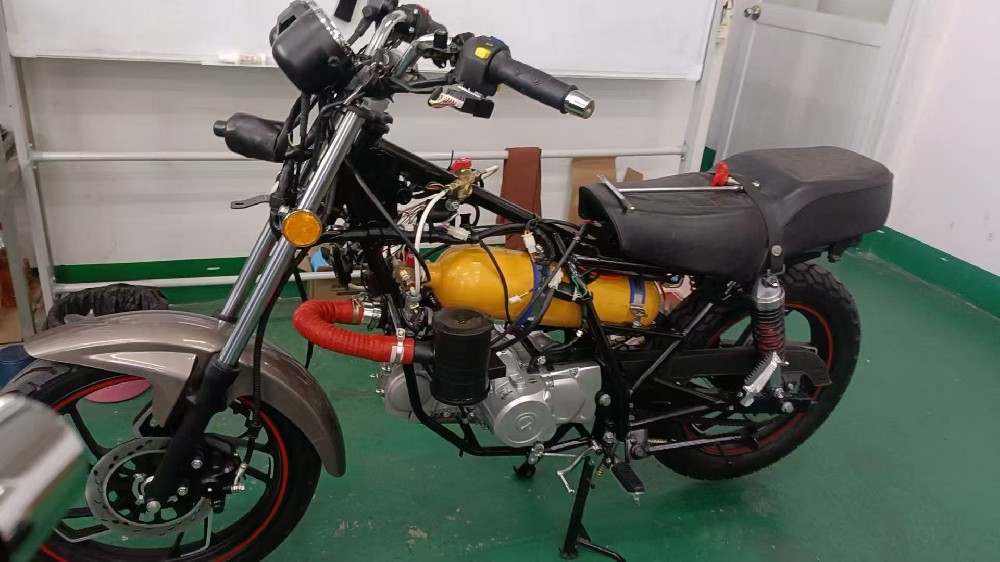
A: Yes. Professional manufacturers offer tailored ECU software calibration and OEM/ODM customization for 3, 4, 6, and 8-cylinder engines, as well as specialized conversion kits for motorcycles, light commercial trucks, and taxi fleets.