
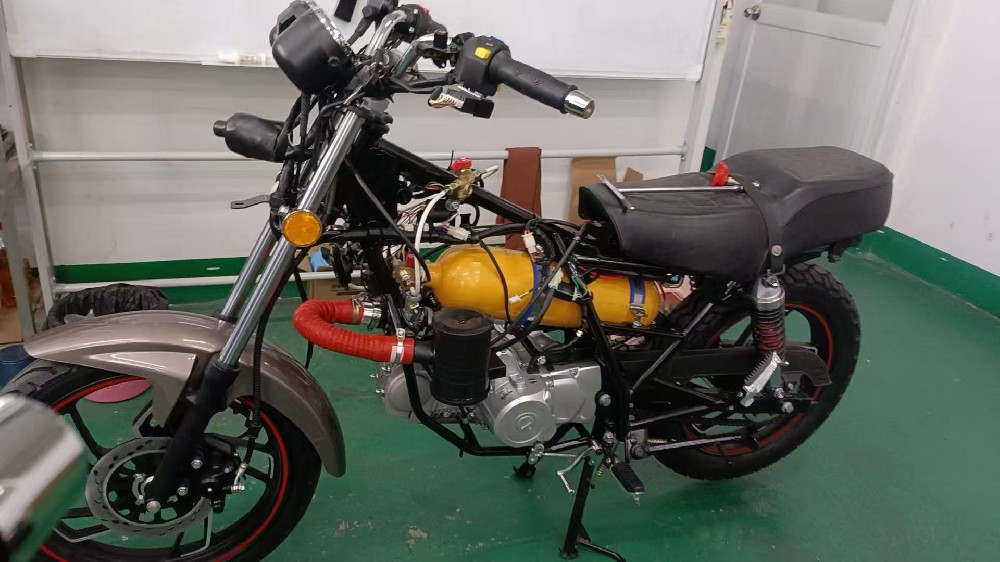
Converting a motorcycle from petrol to CNG (Compressed Natural Gas) is a smart way to cut daily fuel costs. It is ideal for daily riders, delivery fleets, and commercial drivers. While new factory CNG bikes are making news, adding a conversion kit to an existing petrol bike remains the most popular choice across Asia, Africa, and Latin America.
This simple guide covers what a conversion kit includes, how it works, key safety rules, and answers common questions for buyers and installers.
Why Convert a Motorcycle to CNG?
The main reason to switch is saving money. CNG costs 40% to 60% less per kilometer than petrol. For riders covering 80 to 120 km daily, the savings can pay back the kit cost in just 3 to 6 months.
Key benefits include:
Lower Emissions: CNG produces less pollution, helping cities keep the air clean.
Less Engine Wear: Gas does not wash away engine oil like liquid fuel, helping the engine last longer.
Dual-Fuel Flexibility: Riders can switch between CNG and petrol using a simple handlebar switch.
Government Support: Many countries offer tax benefits and support programs for CNG adoption.
Main Components of a CNG Kit
A complete motorcycle CNG conversion kit uses parts specially designed for small bike frames:
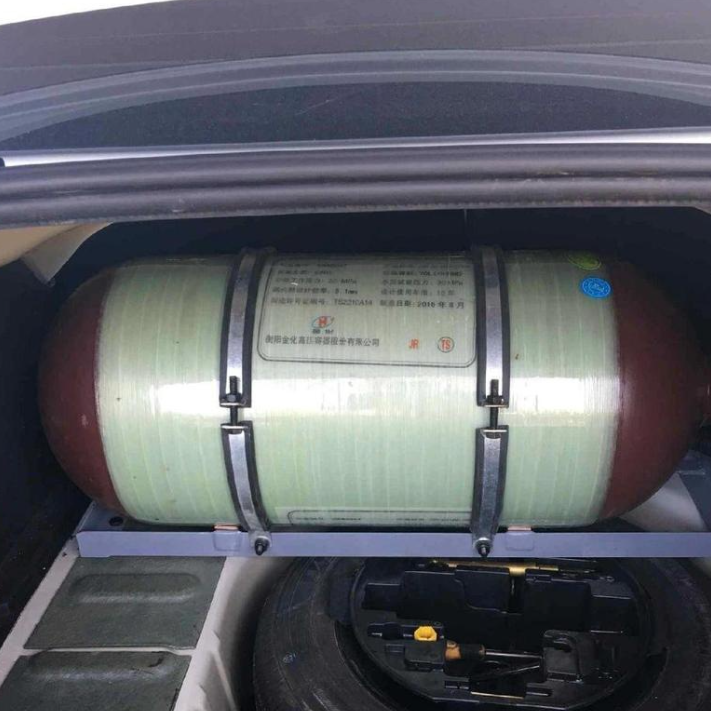
1. CNG Cylinder: A steel or composite tank that holds gas under high pressure (200 bar). A 2-to-6-liter tank provides a range of 80 to 200 km.
2. High-Pressure Reducer: Lowers the gas pressure down to a safe level for the engine. It includes a heating circuit to prevent freezing.
3. ECU (Control Unit): The smart brain that reads sensor data to control exact gas flow, keeping power close to petrol levels.
4. Injector Rail: Delivers precise amounts of CNG directly into the engine intake.
5. Fuel Switch & Gauge: A switch on the handlebar lets you change fuels and view remaining gas levels via LED lights.
6. Solenoid Valves: Automatic safety valves that shut off gas flow when the engine stops.
7. Hoses & Fittings: Heavy-duty, leak-proof tubes designed for high-pressure gas.
8. Filling Valve: The refuel port mounted on the frame, making it easy to connect at gas stations.
How the Conversion Works: Step-by-Step
Mount the Cylinder: Attach the tank safely to the frame or rear rack.
Route High-Pressure Lines: Connect the tank valve to the reducer and filling valve.
Install the Reducer: Place it near the engine and connect it to coolant lines for heating.
Fit the Injectors: Position gas injectors into the intake manifold.
Wire the ECU: Connect the CNG ECU to the motorcycle's factory sensors.
Add the Switch: Mount the fuel switch and level gauge on the handlebar.
Calibrate Software: Use computer software to tune the engine for smooth running.
Test for Leaks: Perform a thorough leak check before riding.
Safety Standards
CNG conversion parts must meet strict safety rules:
| Standard | What It Covers |
|---|---|
| ECE R110 | Safety rules for CNG vehicle components. |
| ECE R67 | Safety rules for LPG vehicle components. |
| ISO 11439 | High-pressure CNG fuel tank standards. |
| NFPA 52 | North American gaseous fuel code. |
CNG vs. LPG Conversion
| Feature | CNG | LPG |
|---|---|---|
| Tank Pressure | High (200 bar) | Low (5-7 bar) |
| Tank Weight | Heavier | Lighter |
| Fuel Savings | 40% to 60% | 30% to 50% |
| Best For | Cities with CNG stations | Areas with wider LPG access |
Key Opportunities for Businesses
Growing Markets: Emerging markets are expanding CNG stations and cutting import taxes on conversion kits.
Commercial Fleets: Delivery companies and motorcycle taxis are turning to CNG to save on daily fuel costs.
Custom Branding (OEM/ODM): Distributors can partner with suppliers like Sichuan Yuncheng to build custom-branded kits.
After-Sales Revenue: Installation opens up ongoing earnings from filter changes, safety checks, and tuning.
Frequently Asked Questions (FAQ)
Will converting a motorcycle to CNG reduce its power?
A modern CNG kit keeps about 90% to 95% of the original petrol power. CNG has slightly less energy than petrol, but smart ECUs adjust injection timing so riders rarely notice a difference during daily rides.
How much does a motorcycle CNG conversion kit cost?
A full conversion kit costs between USD 80 and USD 250 depending on quality and features. Installation labor adds USD 30 to USD 80. Most riders recover this investment in 3 to 6 months through fuel savings.
How far can a motorcycle travel on CNG?
A standard 2 kg cylinder on a 125cc bike provides 100 to 150 km of travel. Larger tanks can offer up to 200 to 300 km. The petrol tank remains as a backup for longer trips.
Is it safe to ride a motorcycle with a CNG cylinder?
Yes, as long as the parts meet certified safety standards (ISO 11439 or ECE R110) and are installed by a professional. CNG tanks are tested to handle high pressure and include safety valves to release gas if overheated.
Can any motorcycle be converted to CNG?
Most 4-stroke petrol bikes (100cc to 250cc) can be converted easily. Fuel-injected models allow for cleaner, smoother setups. Bikes with extremely small frames may not have enough space for a cylinder.
How long does installation take?
A standard professional installation takes 4 to 8 hours. This includes mounting the tank, wiring, software tuning, and testing for leaks.
What maintenance does a CNG system need?
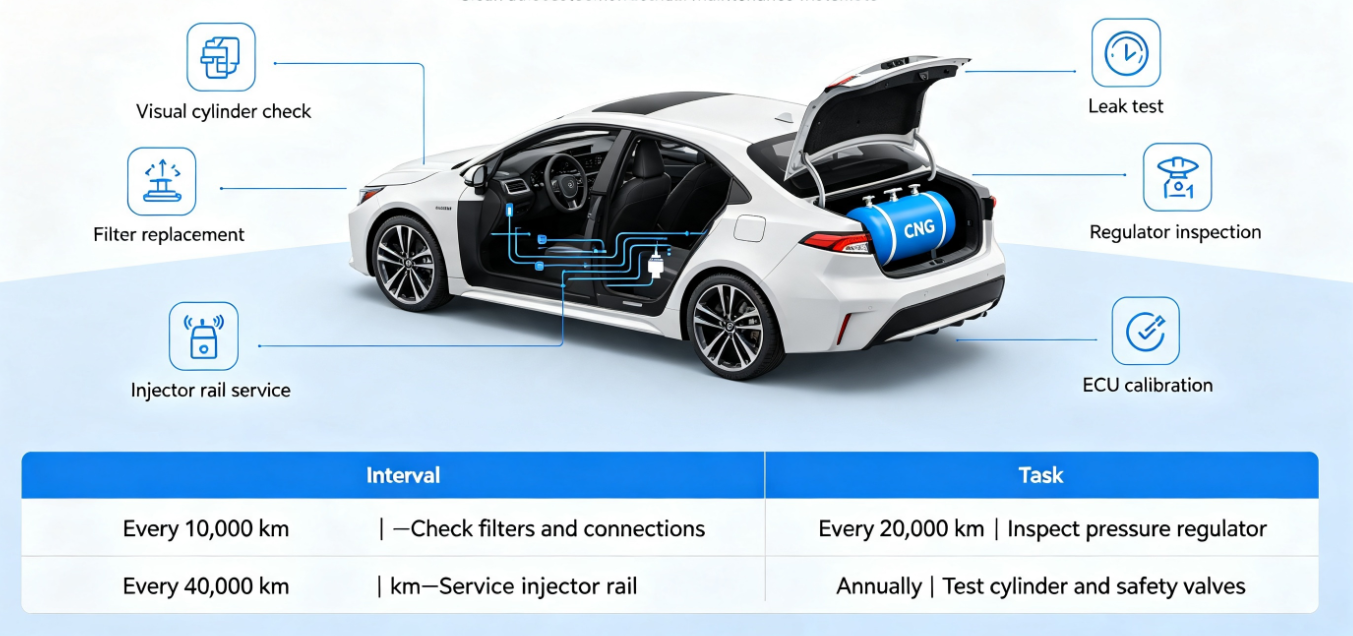
Key maintenance includes replacing the gas filter every 10,000 km, checking hoses every 6 months, and having the tank safety-tested every 3 to 5 years.
Can I switch between CNG and petrol while riding?
Yes. Modern kits feature a handlebar switch that lets you change fuels while riding without stopping or stalling the engine.