
Can Gasoline / Petrol Vehicles Be Converted to CNG or LPG Bi-Fuel Systems?
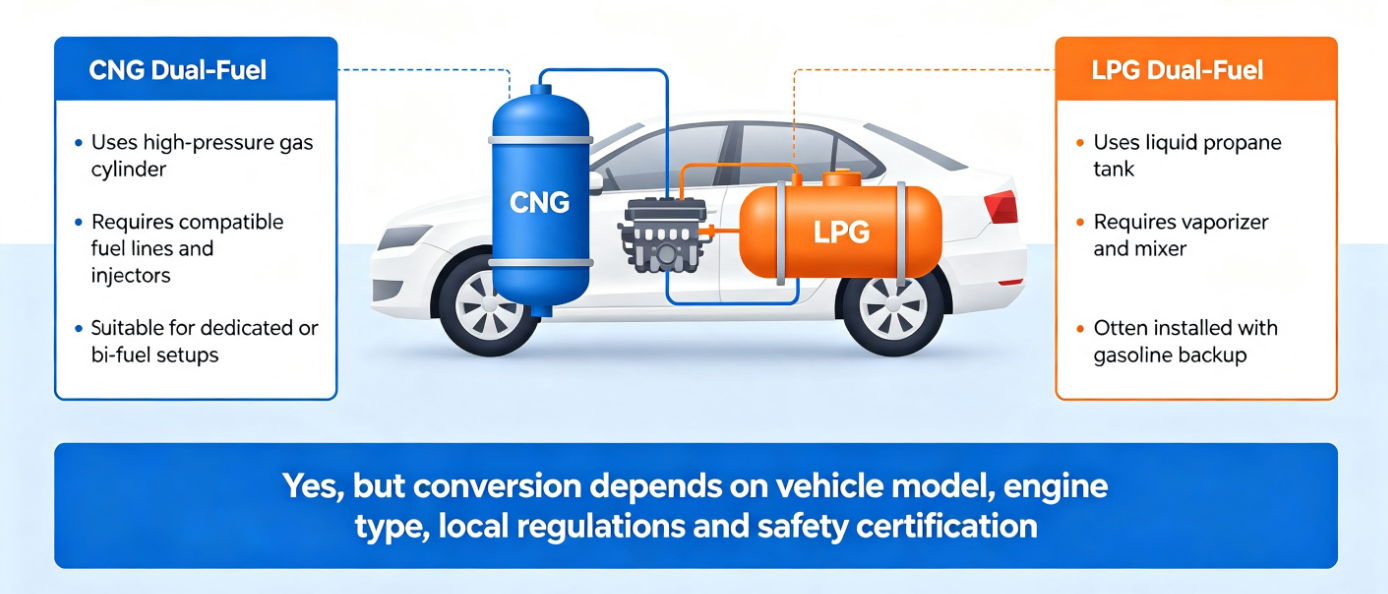
Yes, almost all spark-ignited petrol (gasoline) engines—including naturally aspirated, turbocharged, port-injected, and direct-injection (GDI/FSI) engines—can be safely converted to run on CNG or LPG bi-fuel systems.
Compatible Engine Types
4-Cylinder, 6-Cylinder, and 8-Cylinder Passenger Cars: Taxis, rideshare vehicles, family sedans, and SUVs.
Light Commercial Vehicles (LCVs): Delivery vans, pickup trucks, and fleet vehicles.
Small Gasoline Engines & Motorcycles: Motorcycles, three-wheelers (auto rickshaws), and portable gasoline generators.
Does Gas Conversion Harm the Engine?
No, when properly installed and calibrated, CNG and LPG do not harm the engine. In fact, natural gas and propane burn much cleaner than petrol:
Zero Carbon Deposits: CNG/LPG burns completely, leaving virtually no soot or carbon build-up on spark plugs and pistons.
Cleaner Engine Oil: Gas fuels do not dilute or contaminate crankcase lubricating oil, leading to longer engine oil life and reduced internal engine wear.
Frequently Asked Questions
Which types of gasoline vehicles can be converted to CNG or LPG?
Nearly all spark-ignited petrol engines can be converted, including naturally aspirated, turbocharged, port-injected, and direct-injection (GDI/FSI) engines across passenger cars, LCVs, motorcycles, and small generators.
Does running a vehicle on CNG or LPG cause damage to the engine?
No. When properly installed and calibrated, CNG and LPG burn cleaner than gasoline, leaving virtually no carbon deposits on spark plugs and preventing fuel dilution in crankcase engine oil.