
What Are the Key Differences Between CNG and LPG Vehicle Conversion Kits?
While both Compressed Natural Gas (CNG) and Liquefied Petroleum Gas (LPG) serve as economical, eco-friendly alternatives to petrol, their physical properties require different conversion kit designs and storage systems.
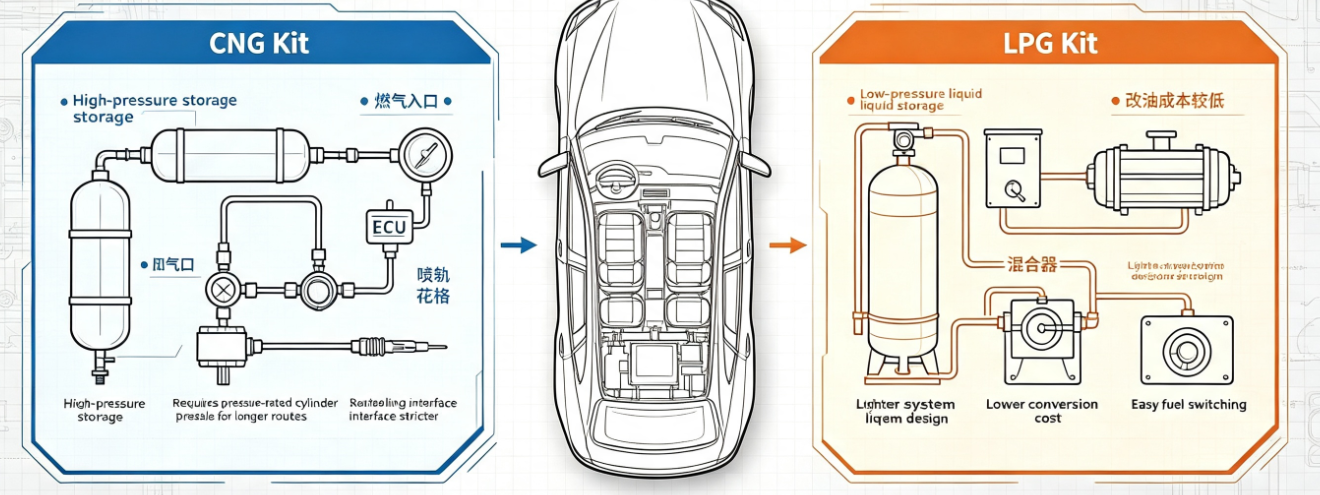
Detailed Comparison Table
| Parameter | CNG System (Natural Gas) | LPG System (Autogas / Propane-Butane) |
|---|---|---|
| Main Component | Methane (CH4) | Propane & Butane Mixture (C3H8 / C4H10) |
| Storage State | High-pressure gas (~200 bar) | Liquid under moderate pressure (~8-10 bar) |
| Tank Type & Weight | Heavy seamless steel/composite cylindrical cylinders | Lighter toroidal (spare wheel) or cylindrical tanks |
| Reducer Design | Multi-stage high-pressure reduction | Vaporizer-reducer for liquid-to-gas phase change |
| Driving Range | 150 – 250 km per tank fill | 400 – 600 km per tank fill |
Frequently Asked Questions
What is the main difference between CNG and LPG conversion kits?
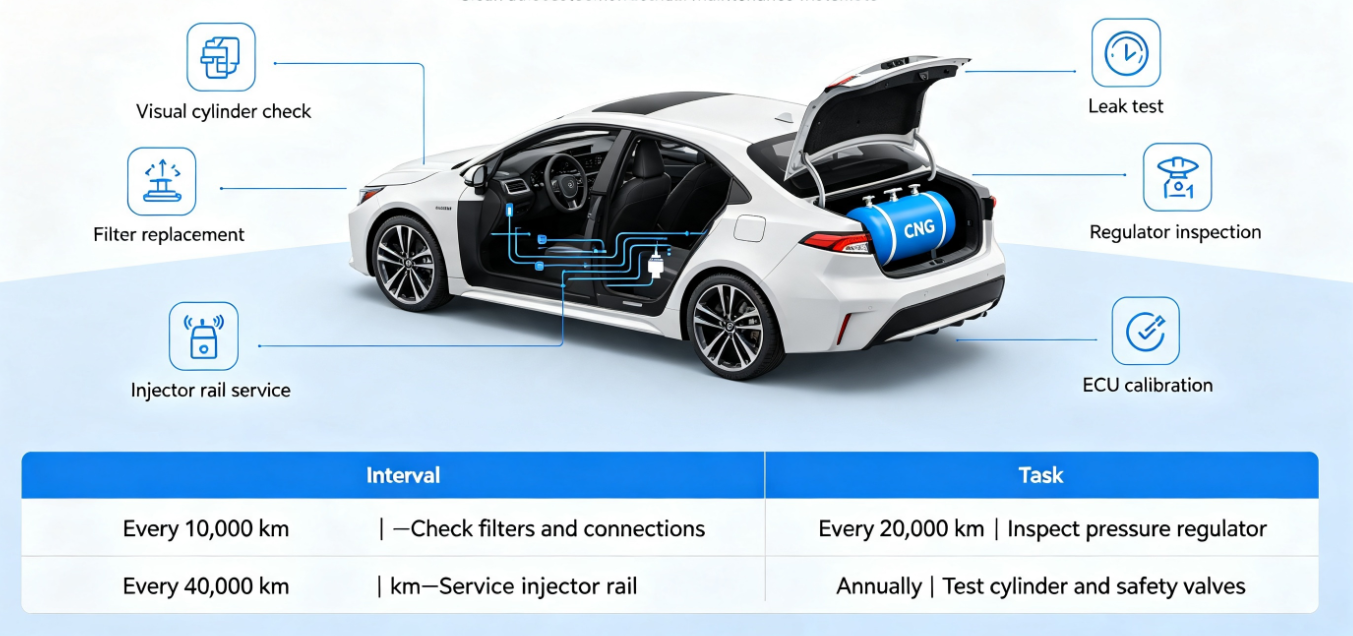
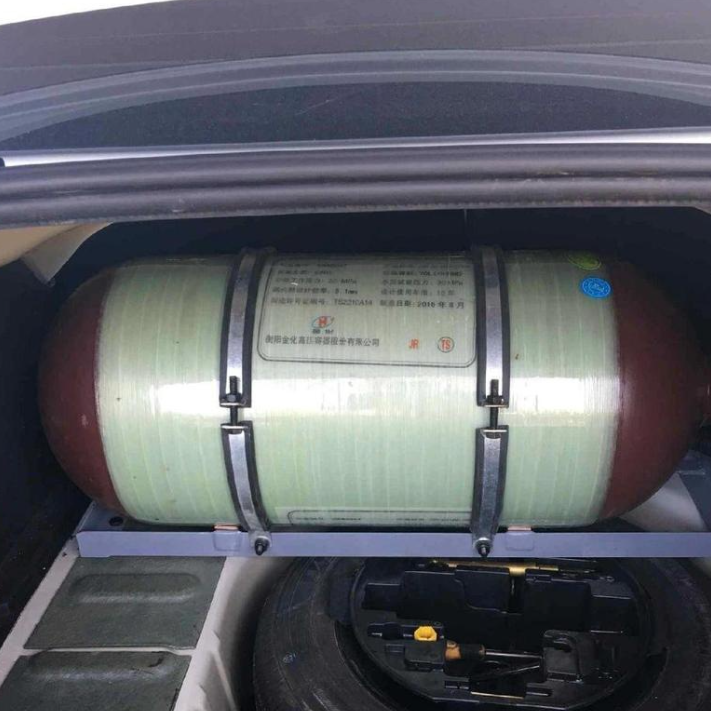
CNG systems store methane gas under high pressure (~200 bar) requiring heavy steel or composite cylinders and multi-stage reducers, whereas LPG systems store a liquid propane-butane mixture under moderate pressure (~8-10 bar) using lighter tanks and vaporizer-reducers.
Which system offers a longer driving range per tank fill: CNG or LPG?
LPG systems offer a longer driving range per tank fill (typically 400 to 600 km) compared to CNG systems (typically 150 to 250 km) due to the higher energy density of liquid storage and larger tank options.