
Can Direct Injection (GDI, TSI, TFSI, SkyActiv) Engines Be Converted to CNG or LPG?
Yes, modern Direct Injection (DI) gasoline engines—such as GDI, TSI, TFSI, EcoBoost, and SkyActiv—can be successfully converted to bi-fuel operation using specialized Direct Injection CNG/LPG conversion systems.
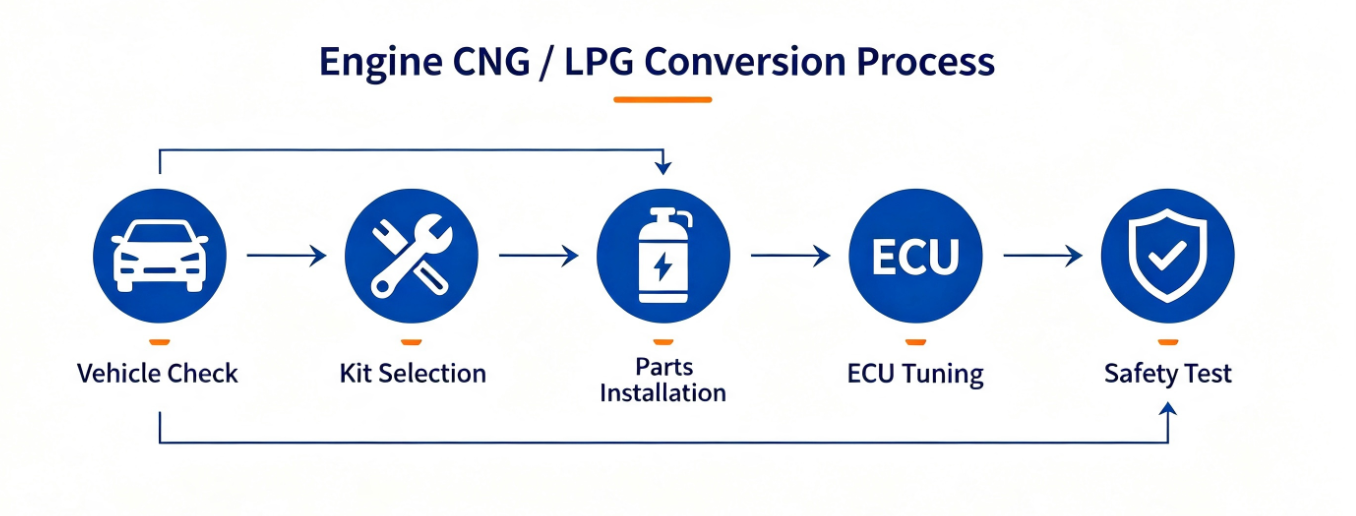
How Direct Injection Conversion Differs from Port Injection
Unlike conventional Port Fuel Injected (PFI) engines where injectors deliver fuel into the intake manifold, direct injection engines spray gasoline directly into the combustion chamber at high pressures. This requires a unique gas control strategy:
Petrol Injection Protection (Emulation): To prevent the original gasoline injectors from overheating or clogging due to direct exposure to combustion heat, the dedicated GDI Gas ECU periodically pulses small amounts of petrol (typically 5% to 15%) while running on gas.
Dedicated GDI Firmware: The Gas ECU uses vehicle-specific software algorithms to match complex high-pressure fuel pulse profiles and split-injection strategies.
Benefits for Direct Injection Vehicles
| Performance Aspect | Standard Port Injection Kit | Specialized GDI Gas Kit |
|---|---|---|
| Fuel Emulation | Cuts petrol completely (100% gas) | Micro-injects petrol to protect DI injectors |
| Thermal Safety | Not suitable for DI engines | Prevents injector nozzle tip carbonization |
| Driveability | Potential hesitation on turbo DI engines | Smooth power transition up to high RPMs |
Frequently Asked Questions
Does converting a GDI engine to CNG/LPG stop petrol consumption completely?
No. Direct injection systems micro-inject small amounts of petrol (5% to 15%) while running on gas. This protects the original petrol injectors from overheating and carbon buildup.
Can I use a standard CNG/LPG conversion kit on a GDI or TSI engine?
No, standard port injection kits are not suitable for direct injection engines. GDI systems require specialized gas ECUs with dedicated firmware designed for high-pressure split-injection strategies.