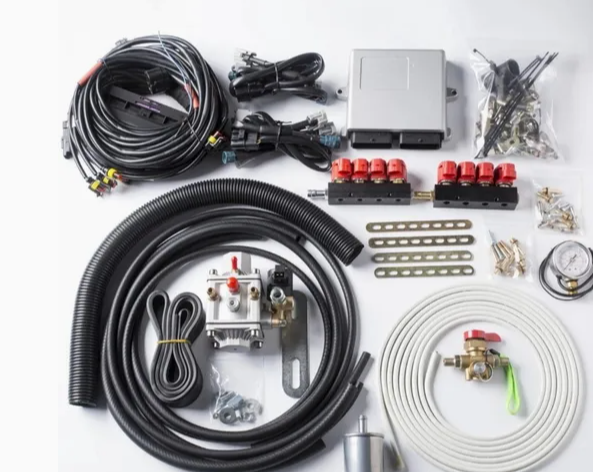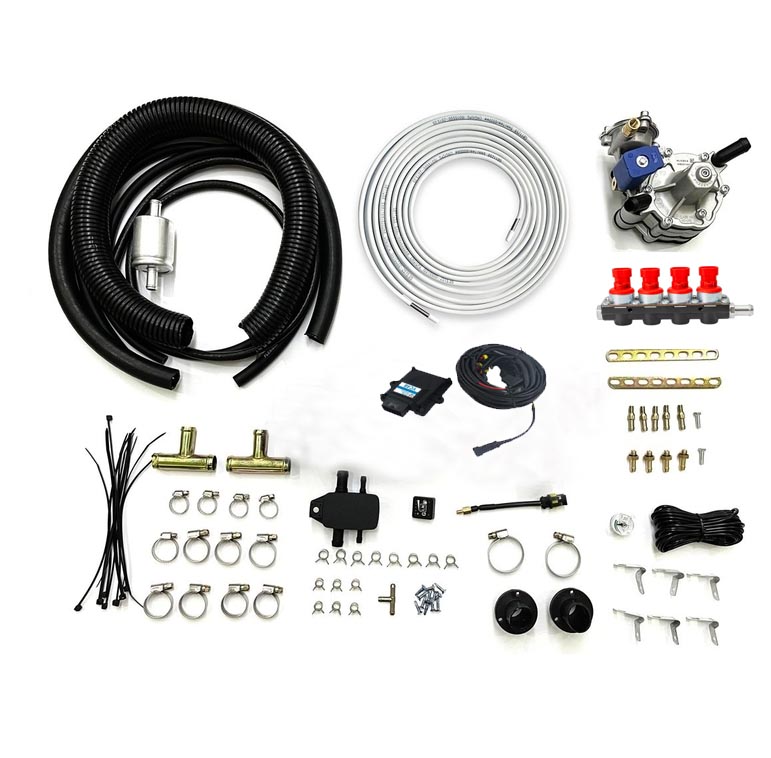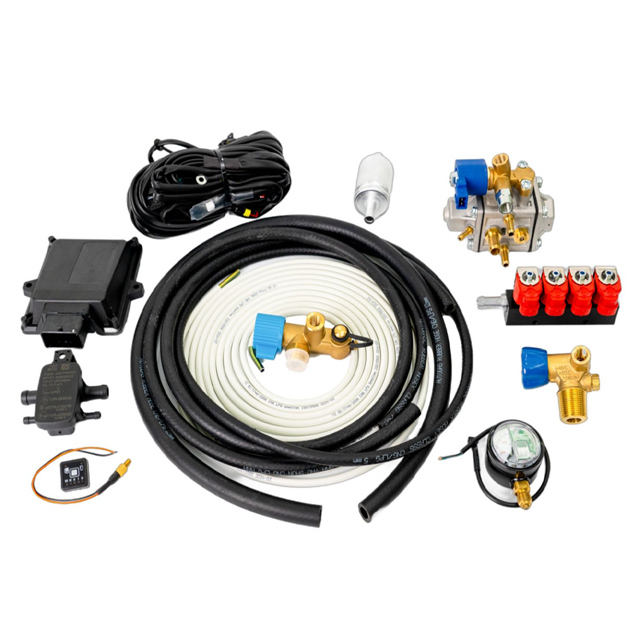

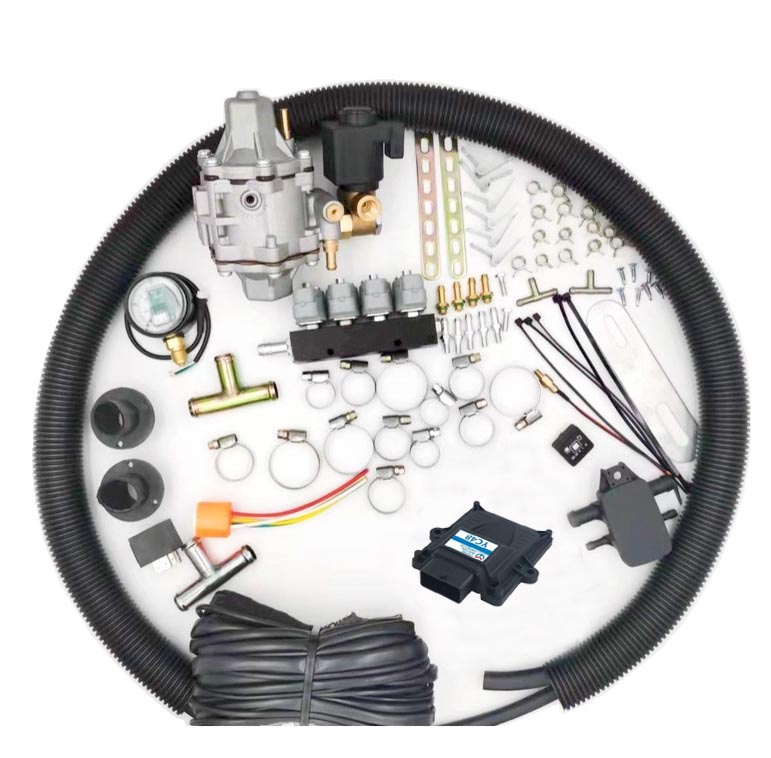
LPG/CNG Sequential Fuel System Injection Auto Gas Conversion Kit
| Fuel Compatibility | LPG (Liquefied Petroleum Gas) / CNG (Compressed Natural Gas) |
|---|---|
| System Generation | 4th Generation Sequential Multi-Point Injection |
| Warranty | 24 Months |
| Brand Service | OEM / ODM / Private Label Customization |
| Product Name | LPG/CNG Sequential Fuel System Injection Auto Gas Conversion Kit |
| Engine Compatibility | 3, 4, 6, and 8 Cylinder Port Fuel Injection (PFI/MPI) Gasoline Engines |
| Core Components | Gas ECU, Fast Solenoid Injector Rail, Reducer Regulator, Wiring Loom, MAP Sensor |
| Material Construction | Anodized Die-Cast Aluminum & Weatherproof Engineering Plastics |
| Quality Standard | 100% Automated Electrical, Pneumatic & Leak Tested Before Shipment |
| MOQ | 1 Piece (Sample Order Supported) |
| Packaging | Export Standard Heavy-Duty Carton Packaging |
Converting traditional gasoline vehicles to operate on dual-fuel liquefied petroleum gas (LPG) or compressed natural gas (CNG) provides a highly effective solution to lower daily fuel expenses by 40% to 60% while drastically reducing vehicle tailpipe emissions. The advanced LPG/CNG Sequential Fuel System Injection Auto Gas Conversion Kit delivers microsecond-accurate gas metering tailored directly to the engine's original ignition maps, ensuring smooth power delivery, high thermal efficiency, and reliable long-term engine performance.
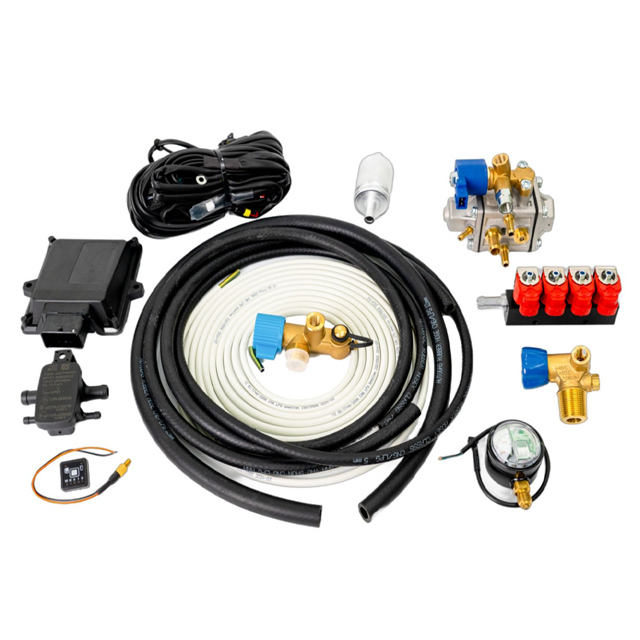
Core Components & Technical Architecture
Modern 4th-generation sequential injection systems inject gaseous fuel directly into each intake manifold port close to the intake valves. This eliminates backfire risks, prevents torque dips, and delivers dynamic throttle response matching the vehicle's original gasoline performance.
32-Bit High-Speed Gas ECU: Continuously monitors engine RPM, manifold absolute pressure (MAP), gas temperature, and fuel pressure to compute accurate injection pulse timings in real time.
Low-Impedance Gas Injector Rail: Features ultra-fast solenoid response times (under 2.0 ms) with 1.5Ω/2.0Ω coils for stable idling, precise fuel metering, and smooth acceleration across all load conditions.
Dual-Stage Heating Pressure Reducer: Features integrated engine coolant channels to optimize thermal heat transfer, maintaining stable output pressure and preventing gas freezing during cold weather or heavy throttling.
Coalescing Gas Filter Unit: Traps moisture, heavy hydrocarbons, and micro-particles down to 10 microns, protecting injector solenoids from sticky deposits.
Digital Cabin Switch & Fuel Gauge: Provides seamless one-touch switching between gasoline and autogas with real-time LED fuel level indicators and acoustic low-pressure alerts.
IP67 Waterproof Wiring Loom: Equipped with automotive-grade sealed connectors and flame-retardant corrugated conduit to withstand high engine bay heat and vibration.
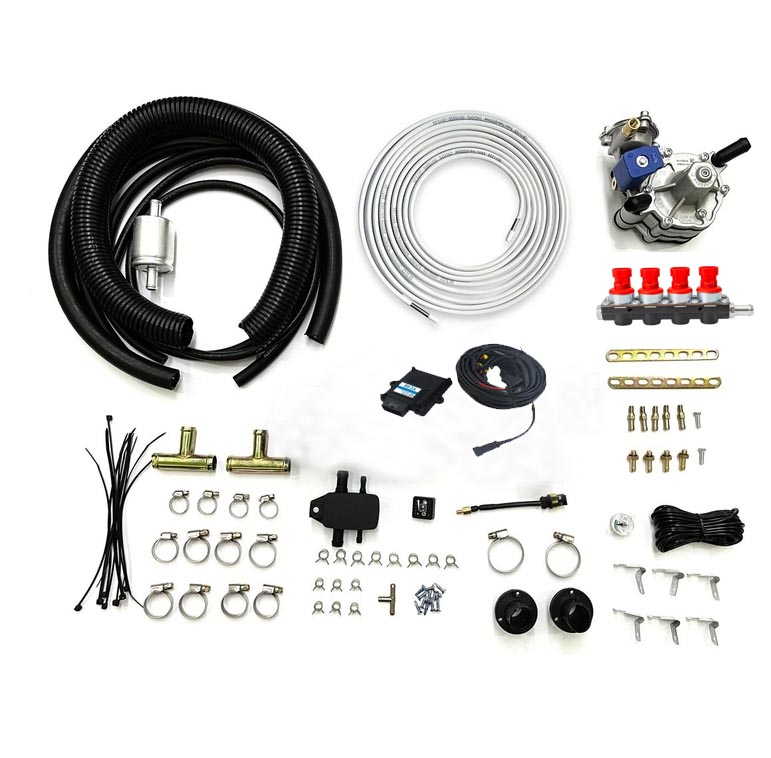
Key Advantages & Engineering Highlights
Designed for universal adaptation across passenger vehicles, taxis, and commercial transport fleets, this sequential injection platform balances economic fuel savings with driver safety and convenience.
OBDII Real-Time Auto-Adaptation: Connects to the vehicle's onboard CAN-BUS network to automatically trim Short-Term (STFT) and Long-Term Fuel Trims (LTFT) for stoichiometric combustion under varying driving conditions.
Seamless Engine Cold-Start Management: Automatically starts on petrol and switches smoothly to LPG/CNG once engine coolant reaches the optimal temperature threshold (typically 35°C).
Full Torque Retention: Micro-calibrated injection timing prevents power losses, ensuring consistent engine torque output during automatic fuel switching.
Manufacturing Quality & Factory Testing Standards
Every conversion kit is produced in modern, automated assembly facilities under strict quality assurance protocols. From CNC-machined aluminum bodies to automated circuit board soldering, every component undergoes strict batch testing to guarantee leak-free reliability.
Frequently Asked Questions (FAQ)
What is the difference between LPG and CNG conversion kits?
While both systems use sequential gas injection, LPG is stored as a liquid under lower pressure (approx. 5–10 bar) and uses a liquid-to-vapor converter, whereas CNG is stored as a compressed gas under high pressure (approx. 200 bar) and requires a heavy-duty two-stage pressure reducer.
Will installing a sequential LPG/CNG kit cause engine power loss?
With modern 4th-generation sequential injection and dynamic timing advance, power differences are virtually imperceptible. LPG maintains near-identical horsepower to gasoline, while CNG typically shows a minor 5% to 8% torque variance, which can be compensated through timing adjustment.
Is a sequential autogas conversion kit safe for daily driving?
Yes. Premium conversion kits integrate multiple safety layers, including automatic excess-flow shutoff valves, pressure relief devices (PRD), thermal overload protection, and IP67 waterproof electronics.
What routine maintenance is needed for a sequential LPG/CNG system?
Maintenance is simple and low-cost: replace the vapor phase filter element every 15,000 to 20,000 kilometers and inspect vacuum lines and coolant fittings during regular engine oil change intervals.